1833: The Slavery Abolition Act
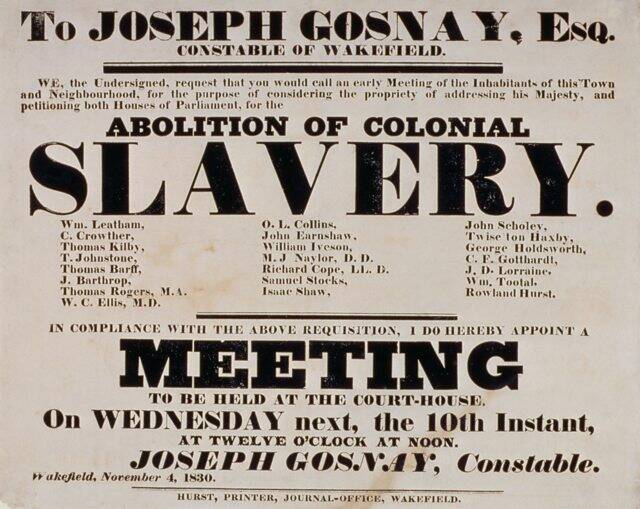
1833: The Slavery Abolition Act was passed on 28 August 1833, which authorised the £20 million payment
• 1 August 1834: Enslaved people were officially freed (though many were kept in an "apprenticeship" system until 1838)
• 1835–1846: The money was actually paid out in stages — not all at once
• 23 December 1837: The Slave Compensation Act 1837 formally put the payment scheme into law
• 2015: Remarkably, the final portion of the loan used to fund it was only paid off by UK taxpayers in 2015

💰 To whom was it paid?
• Not to the enslaved people — to their owners. Every penny went to the slave owners, not a single penny to those who had been enslaved
• Over 40,000 individual claims were made by people who were legally registered as slave owners across the British colonies — mainly the Caribbean, Mauritius, and the Cape of Good Hope (South Africa)
• Some of the biggest recipients included plantation-owning families, Members of Parliament, bankers, and members of the British aristocracy — many of whom lived in Britain and had never even visited the colonies
• The UCL Legacies of British Slave-ownership project has documented all the named claimants — you can look them up online yourself
The Centre for the Study of the Legacies of British Slavery
The Centre for the Study of the Legacies of British Slavery has been established at UCL with the generous support of the Hutchins Center at Harvard. The Centre builds on two earlier projects based at UCL tracing the impact of slave-ownership on the formation of modern Britain: the ESRC-funded Legacies of British Slave-ownership project (2009-2012), and the ESRC and AHRC-funded Structure and significance of British Caribbean slave-ownership 1763-1833 (2013-2015).
Colonial slavery shaped modern Britain and we all still live with its legacies. The slave-owners were one very important means by which the fruits of slavery were transmitted to metropolitan Britain. We believe that research and analysis of this group are key to understanding the extent and the limits of slavery's role in shaping British history and leaving lasting legacies that reach into the present.


Our history
We are now moving in the direction of more focused research on the lives of enslaved people in the Caribbean. This is a natural development from our work on slave-owners and estates and an exciting demonstration of our commitment to the study of the multiple legacies of slavery in the British imperial world. With growth comes necessary change.
Add comment
Comments